FILM RIGHTS AVAILABLE

FILM RIGHTS AVAILABLE

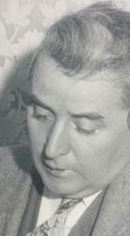
Roger Touhy before the parole board that released him


Roger Touhy before the parole board that released him. The writer Saul Alinksy was one of the members of the board


Saul David Alinsky (January 30, 1909 – June 12, 1972) was an American community organizer and writer. He is generally considered to be the founder of modern community organizing. He is often noted for his book Rules for Radicals.
In the course of nearly four decades of political organizing, Alinsky received much criticism, but also gained praise from many public figures. His organizing skills were focused on improving the living conditions of poor communities across North America. In the 1950s, he began turning his attention to improving conditions in the African-American ghettos, beginning with Chicago's and later traveling to other ghettos in California, Michigan, New York City, and a dozen other "trouble spots".
His ideas were adapted in the 1960s by some US college students and other young counterculture-era organizers, who used them as part of their strategies for organizing on campus and beyond. Time magazine once wrote that "American democracy is being altered by Alinsky's ideas," and conservative author William F. Buckley said he was "very close to being an organizational genius."
Saul David Alinsky was born in Chicago, Illinois in 1909 to Russian Jewish immigrant parents, the only surviving son of Benjamin Alinsky's marriage to his second wife, Sarah Tannenbaum Alinsky.
Alinsky stated during an interview that his parents never became involved in the "new socialist movement." He added that they were "strict Orthodox, their whole life revolved around work and synagogue ... I remember as a kid being told how important it was to study."
Because of his strict Jewish upbringing, he was asked whether he ever encountered antisemitism while growing up in Chicago. He replied, "it was so pervasive you didn't really even think about it; you just accepted it as a fact of life."
 He considered himself to be a devout Jew until the age of 12, after which time he began to fear that his parents would force him to become a rabbi.
I went through some pretty rapid withdrawal symptoms and kicked the habit ... But I'll tell you one thing about religious identity...Whenever anyone asks me my religion, I always say—and always will say—Jewish.
He worked his way through the University of Chicago, where he majored in archaeology, a subject that fascinated him. His plans to become a professional archaeologist were changed due to the ongoing economic Depression. He later stated, "Archaeologists were in about as much demand as horses and buggies. All the guys who funded the field trips were being scraped off Wall Street sidewalks."
After attending two years of graduate school, he dropped out to accept work for the state of Illinois as a criminologist. On a part-time basis, he also began working as an organizer with the Congress of Industrial Organizations (C.I.O.). After a few years, by 1939, he became less active in the labor movement and became more active in general community organizing, starting with the Back of the Yards and other poor areas on the South Side of Chicago. His early efforts to "turn scattered, voiceless discontent into a united protest" aroused the admiration of Illinois governor Adlai Stevenson, who said Alinsky's aims "most faithfully reflect our ideals of brotherhood, tolerance, charity and dignity of the individual."
As a result of his efforts and success at helping slum communities, Alinsky spent the next 10 years repeating his organization work across the nation, "from Kansas City and Detroit to the barrios of Southern California." By 1950 he turned his attention to the African American ghettos of Chicago. His actions later aroused the hatred of Mayor Richard J. Daley, who also acknowledged that "Alinsky loves Chicago the same as I do."
 He traveled to California at the request of the San Francisco Bay Area Presbyterian Churches to help organize the black ghetto in Oakland. Hearing of his plans, "the panic-stricken Oakland City Council promptly introduced a resolution banning him from the city."
In the 1930s, Alinsky organized the Back of the Yards neighborhood in Chicago (made infamous by Upton Sinclair's 1906 novel, The Jungle, which described the horrific working conditions in the Union Stock Yards). He went on to found the Industrial Areas Foundation while organizing the Woodlawn neighborhood; IAF trained organizers and assisted in the founding of community organizations around the country.
In Rules for Radicals (his final work, published in 1971 one year before his death), Alinsky addressed the 1960s generation of radicals, outlining his views on organizing for mass power. In the opening paragraph Alinsky writes,
What follows is for those who want to change the world from what it is to what they believe it should be. The Prince was written by Machiavelli for the Haves on how to hold power. Rules for Radicals is written for the Have-Nots on how to take it away."
Alinsky did not join political parties. When asked during an interview whether he ever considered becoming a Communist party member, he replied:
Not at any time. I've never joined any organization—not even the ones I've organized myself. I prize my own independence too much. And philosophically, I could never accept any rigid dogma or ideology, whether it's Christianity or Marxism. One of the most important things in life is what Judge Learned Hand described as 'that ever-gnawing inner doubt as to whether you're right.' If you don't have that, if you think you've got an inside track to absolute truth, you become doctrinaire, humorless and intellectually constipated. The greatest crimes in history have been perpetrated by such religious and political and racial fanatics, from the persecutions of the Inquisition on down to Communist purges and Nazi genocide.
He did not have much respect for mainstream political leaders who tried to interfere with growing black–white unity during the difficult years of the Great Depression. In Alinsky's view, new voices and new values were being heard in the U.S., and "people began citing John Donne's 'No man is an island.'"
 He observed that the hardship affecting all classes of the population was causing them to start "banding together to improve their lives," and discovering how much in common they really had with their fellow man.
Alinsky once explained that his reasons for organizing in black communities included:
Negroes were being lynched regularly in the South as the first stirrings of black opposition began to be felt, and many of the white civil rights organizers and labor agitators who had started to work with them were tarred and feathered, castrated—or killed. Most Southern politicians were members of the Ku Klux Klan and had no compunction about boasting of it.
Alinsky's tactics were often unorthodox. In Rules for Radicals he wrote,
[t]he job of the organizer is to maneuver and bait the establishment so that it will publicly attack him as a 'dangerous enemy.'" According to Alinsky, "the hysterical instant reaction of the establishment [will] not only validate [the organizer's] credentials of competency but also ensure automatic popular invitation."
As an example, after organizing FIGHT (an acronym for Freedom, Independence [subsequently Integration], God, Honor, Today) in Rochester, New York, Alinsky once threatened to stage a "fart in" to disrupt the sensibilities of the city's establishment at a Rochester Philharmonic concert. FIGHT members were to consume large quantities of baked beans after which, according to author Nicholas von Hoffman, "FIGHT's increasingly gaseous music-loving members would hide themselves to the concert hall where they would sit expelling gaseous vapors with such noisy velocity as to compete with the woodwinds."
 Satisfied with his threat yielding action, Alinsky later threatened a "piss in" at Chicago O'Hare Airport. Alinsky planned to arrange for large numbers of well-dressed African Americans to occupy the urinals and toilets at O'Hare for as long as it took to bring the city to the bargaining table. According to Alinsky, once again the threat alone was sufficient to produce results.
 In Rules for Radicals, he notes that this tactic fell under two of his rules: Rule #3: Wherever possible, go outside the experience of the enemy; and Rule #4: Ridicule is man's most potent weapon.
Alinsky described his plans for 1972 to begin to organize the white middle class across America, and the necessity of that project. He believed that what President Richard Nixon and Vice-President Spiro Agnew then called "The Silent Majority" was living in frustration and despair, worried about their future, and ripe for a turn to radical social change, to become politically active citizens. He feared the middle class could be driven to a right-wing viewpoint, "making them ripe for the plucking by some guy on horseback promising a return to the vanished verities of yesterday."
 His stated motive: "I love this goddamn country, and we're going to take it back."
The documentary, The Democratic Promise: Saul Alinsky and His Legacy, states that "Alinsky championed new ways to organize the poor and powerless that created a backyard revolution in cities across America."
 Based on his organizing in Chicago, Alinsky formed the Industrial Areas Foundation (IAF) in 1940. After he died, Edward T. Chambers became its Executive Director. Hundreds of professional community and labor organizers, and thousands of community and labor leaders have been trained at its workshops. Fred Ross, who worked for Alinsky, was the principal mentor for Cesar Chavez and Dolores Huerta. Other organizations following in the tradition of the Congregation-based Community Organizing pioneered by IAF include PICO National Network, Gamaliel Foundation, and Direct Action and Research Training Center (DART).
 Siegel, Robert; Horwitt, Sanford (May 21, 2007). "NPR Democrats and the Legacy of Activist Saul Alinsky". All Things Considered. Npr.org. Retrieved 2011-09-08. "Robert Siegel talks to author Sanford Horwitt, who wrote a biography of Saul Alinsky called Let Them Call Me 'Rebel'. The book traces Alinsky's early activism in Chicago's meatpacking neighborhood."
Several prominent American leaders have been influenced by Alinsky's teachings,[16] including Ed Chambers, Tom Gaudette, Ernesto Cortes, Michael Gecan, Wade Rathke,and Patrick Crowley.
 Alinsky is often credited with laying the foundation for the grassroots political organizing that dominated the 1960s.
 Jack Newfield writing in New York magazine included Alinsky among "the purest Avatars of the populist movement," along with Ralph Nader, Cesar Chavez, and Jesse Jackson.[19]
Biographer Sanford Horwitt has claimed that U.S. President Barack Obama was influenced by Alinsky and followed in his footsteps as a Chicago-based community organizer. Horwitt asserted that Barack Obama's 2008 presidential campaign was influenced by Alinsky's teachings.
Adam Brandon, a spokesman for the conservative non-profit organization FreedomWorks, one of several groups involved in organizing Tea Party protests, says the group gives Alinsky's Rules for Radicals to its top leadership members. A shortened guide called Rules for Patriots is distributed to its entire network. In a January 2012 story that appeared in The Wall Street Journal, citing the organization's tactic of sending activists to town-hall meetings, Brandon explained, "his [Alinsky's] tactics when it comes to grass-roots organizing are incredibly effective." Former Republican House Majority Leader Dick Armey also gives copies of Alinsky's book Rules for Radicals to Tea Party leaders.
In 1969, Alinsky was awarded the Pacem in Terris Peace and Freedom Award.
Alinsky died at the age of 63 of a sudden, massive heart attack in 1972, on a street corner in Carmel, California. Two months previously, he had discussed life after death in his interview with Playboy:
ALINSKY: ... if there is an afterlife, and I have anything to say about it, I will unreservedly choose to go to hell.
PLAYBOY: Why?
ALINSKY: Hell would be heaven for me. All my life I've been with the have-nots. Over here, if you're a have-not, you're short of dough. If you're a have-not in hell, you're short of virtue. Once I get into hell, I'll start organizing the have-nots over there.
PLAYBOY: Why them?

ALINSKY: They're my kind of people.


Touhy's home

Roger Touhy's expansive home was on River Road in Des Plains across from the Al Saints Cemetery. As far as I can tell, the home which was surrounded by a stone wall with wrought iron gates and had a full size pool in the back, was torn down in 1952-54 when the cemetery expanded from across the street.  

Murders

The Touhy’s killed the following Capone beer peddlers in retaliation for the murder of Matt Kolb. The suspected gunmen were Tommy Touhy and "Broken Nose" Fogarty

Nicholas Maggio
Anthony Persico  
Elmer Russel (described as a waiter)
Fred D’Giovanni (member of the Capone Organization)

Joe Provenzano (member of the Capone Organization)

Tubbo Gilbert, the worlds richest cop, 1933


Jake the Barber 1933


Roger Touhy and Matt Kolb had their own plans for Chicago's labor unions.

   Roger Touhy and Matt Kolb had their own plans for Chicago's labor unions. Prohibition, gambling and the ability to avoid big political payoffs and long drawn out beer wars had made them rich. By 1932, they had the money, and the firepower to take over the entire Chicago Teamsters organization without having to split any of it with Capone.
   Unlike Capone, they didn't need to terrorize their way into each local union before reaching the Teamsters International office. They had a direct and trusted contact in the International office with Edward Chicken McFadden, an old time labor terrorist with deep contacts into the Teamsters International leadership.
   McFadden picked up the name Chicken when he organized a shakedown operation known as the Kosher Chicken Pluckers Union. He had an arrest record dating back to 1901 that included intent to rob, police impersonation and labor slugging. He had been a business partner with a labor mobster named "Big Tim" Lynch, controlling the Chauffeurs and Teamsters Union together, until Capone had Lynch killed. Capone took over the union and chased McFadden and his contacts into the waiting arms of Roger and Tommy Touhy. In early 1932, when Capone started his major push against the unions, it was McFadden who set up a meeting between the Touhys and Patty Burrell, the Teamsters International Vice President. Burrell called a meeting of all the locals threatened by the syndicate and gave them a choice; they could stand alone against Capone and lose their unions and probably their lives, or they could band together and move their operations into Touhy's camp.
   Most of the bosses already knew Roger and decided he was the lesser of the two evils. They pitched into a $75,000 protection fund that was handed over to Tommy Touhy. In exchange, the union bosses were allowed to keep their locals, and the treasuries that came with them, and live under the Touhys' protection.

Despite the fact that the only new testimony was shaky at best,

   
Capone

 Despite the fact that the only new testimony was shaky at best, the jury took less than four hours to decide their guilt and six hours to decide the penalty. Half the jurors wanted to impose the death penalty and half wanted life in prison. Ultimately Roger was sentenced to ninety-nine years in Joliet State Prison.
   When the verdict was read, Roger gagged, coughed violently, vomited, and had to be carried out by deputies while the courtroom exploded in cheers.
   In a separate trial, Isaac Costner and Basil Banghart were also found guilty for their role in the Factor kidnapping and given ninety-nine years each. Costner screamed double-cross and said that the federal government promised to let him off with five years if he testified against the Touhys in the Factor case. The government denied any such promise, saying that they had no interest in making deals for the Cook County States Attorney's Office. The day Roger Touhy went to prison, the syndicate, led by Rocco DeGrazio, moved into his section of Cook County and never moved out again.
   Now that Roger and the others were convicted, John Factor had a problem; he was going to be extradited, or so he thought.
   But the U.S. Department of State made no moves to extradite him and Factor was free. He had beaten deportation. However, the conviction against him by the English courts was ordered to remain in effect until he was tried before a Royal Bench in England and that day would come sooner than he or anyone else realized.

Next, the state called Eddie Schwabauer to the stand.


Ethel Touhy


   Next, the state called Eddie Schwabauer to the stand. Tubbo Gilbert, of the Cook County States Attorney's Office, and Jake the Barber had long since gotten to Schwabauer and bribed him to lie on the witness stand, which he did and did well. He testified that on the night Factor was kidnapped he was doing guard duty in Touhy's yard. This wasn't true. Weeks earlier Touhy had fired him for being drunk on duty. Still, Schwabauer said that on the night in question that the Touhy household was uninhabited all night. Schwabauer's testimony directly contradicted Touhy's defense that he had spent most of the night sitting on his front porch with his wife and her girlfriend, Emily Ivins.
   Schwabauer's mother, Mrs. Clara Sczech, who according to Touhy was "a poor, middle aged, bedeviled, bewildered woman," testified next. Sczech was a maid in a house in Glenview, Illinois rented in Eddie McFadden's name for one of the union bosses. There, she claimed she saw Basil Banghart and someone who looked like Roger Touhy. Her precise words were, "I'm not sure whether I seen him there or not." Then, pointing at Touhy, a man she had known for at least five years, she said "This here fellow looks quite a lot like him, still there is not quite so much resemblance."
   She ended her testimony with a lie, saying that after Factor was released by his kidnappers, McFadden told her that she was no longer needed to clean the house. The implication being that the house was where Factor was held during his kidnapping.
   Buck Henrichsen testified next. He appeared completely relaxed, having spent the past seven weeks before the trial living in protective custody at Chicago's finest hotel, the Palmer House, courtesy of the States Attorney.
   Roger didn't know anything about Henrichsen's testimony until the day he took the witness stand. Of this unexpected testimony Touhy wrote, "I didn't expect Buck Henrichsen to shove a knife between my ribs and twist it. I had never done anything but good for him....Henrichsen couldn't meet my eyes when Crowley called him to the witness stand. He was ashamed."
   Henrichsen testified that Roger ordered him to find a house in Glenview for Eddie McFadden to rent, and that on the night Factor was kidnapped, he had seen Touhy at Jim Wagner's saloon drinking with Schafer, Kator, Banghart and the others who were now accused of the kidnapping.
   His testimony of course was false. Regardless of their validity his words proved to be very damaging to Roger's case. As far as the jury knew Henrichsen was a former police officer and simple night watchman around Roger's home who had no reason to lie about his employer on the witness stand.
   After Henrichsen's testimony, Roger demanded that his lawyer, William Scott Stewart, place him on the stand. Stewart refused. This led Roger to sign an affidavit requesting a new lawyer. Insulted, Stewart refused to go on with the trial. Eventually he resumed but only after Judge Feinberg threatened to jail him. When Stewart refused Feinberg's order and simply didn't show up for court the judge sent his bailiff to Stewart's home and escorted him back to the courtroom in handcuffs.
   Touhy recalls, “As the trial moved toward a close, I was fed up to the Adam's Apple with our lawyer. So were Kator and (Schafer). Somebody had told me that Stewart had gone to lunch with Crowley and that he had chatted with Tubbo Gilbert during a court recess....Stewart, although he knew I was innocent,  wouldn't listen to me...the squabbling between us  was endless.”
   His fate was now in the hands of a man he didn't trust.

After three weeks of testimony, the jury retired.


Jake the Barber


   After three weeks of testimony, the jury retired. After only one day's deliberation the trial was dismissed by Judge Feinberg as deadlocked. A second trial was to begin in eleven days.
   The second trial was almost a duplicate of the first. The only exception was the testimony of Ike Costner and Basil Banghart whom Factor called to build up his story.
   Costner's testimony was part of a deal he made following his arrest in Baltimore in February of 1933 along with Basil Banghart for their part in a $105,000 mail truck robbery in Charlotte, North Carolina.
   Upon learning of Costner and Banghart's arrest, Tubbo Gilbert, Jake Factor and six deputies traveled by train to Maryland. Also joining them was Joseph P. Keenan, the Special U.S. Attorney charged by the Attorney General with stopping the rash of kidnappings that were plaguing the country. With Keenan's help, Costner and Banghart were released in Gilbert's custody and somewhere along the train ride back to Chicago, Ike Costner agreed to lie on the witness stand in return for a lighter sentence in the mail robbery case.
   "On the day that Factor and Gilbert brought the two witnesses back from Baltimore," Touhy wrote, "I was walking in the corridor leading from Judge Feinberg's courtroom to the prisoner's elevator during a recess. Ahead of me, I spotted Tubbo Gilbert and a man I never had seen before. I figured it might be another fake finger, so I hunched down my
head and hid my face with my coat collar. I heard Tubbo say 'The guy in the light suit, that's Touhy'...in my cell, I got the hell out of that light suit and put on a dark blue one. When I got back to the court, Costner was the first witness."
   Crowley asked Costner "And did you know Roger Touhy?"
   Costner went blank and didn't answer. Crowley asked again and Costner mumbled "Yes."
   "Please point to Mr. Touhy. He is present in the courtroom."
   Costner looked around the room desperately. He didn't have a clue as to what Roger Touhy looked like.
   Ray Brennan, who covered parts of the trial for the Associated Press, later said that Costner looked over at the defense table and stared at one of the Cook County deputies guarding the Touhys and was about to point to him as the man he suspected of being Roger when Stewart said very loudly, "Stand up, Roger."
   Touhy was mortified but stood up, expressionless.
   'Yeah, that's him," said a relieved Costner.
   "Did you know Gus Schafer?" Crowley continued.
   Again Costner went blank and again, remarkably, Stewart shouted "Stand up Gus," and Schafer stood up, a look of complete disbelief on his face.
   "Did you know Kator? Albert Kator?" Crowley asked.
   Stewart told Kator to stand which he did.
   Crowley asked Costner if he saw all three men at the apartment house and Costner said he had seen them there.
   "I have always been bitter," Roger wrote, "and always will be about Stewart's making me a clay pigeon for Costner to shoot down....Stewart said he regarded it as psychologically important with the jury to have a defendant admit his identity at once, rather than wait to be pointed out. Maybe so, but I don't believe Costner could have identified me without my own lawyer's help."
   Costner testified that he had come to Chicago at Basil Banghart's request because Banghart was eager to get money for Touhy's defense in St. Paul against the Hamm kidnapping charges.
   Stewart leaped to his feet and shouted "What! What lawyer?"
   "I don't remember, Banghart never told me his name."
   Costner said that it was Touhy's enforcer James Tribbles who pulled him into the Factor kidnapping in the first place.
   It was safe to accuse Tribbles because he was dead. They found him almost the same way they found Teddy Newberry, tied with chicken wire, beaten to a purple pulp and shot in the head and dumped alongside a ditch. Everybody blamed Tommy Touhy for the murder, but by then Tommy's legs had given out and he was confined to bed in a log cabin hidden away on Joe Saltis' estate in rural Wisconsin.
   Costner said that on the night Factor was kidnapped, Tribbles took him to a lonely, rural side road near The Dells where Roger Touhy, Kator, Schafer and Banghart were waiting. When Factor pulled out of The Dells' parking lot, Costner said that the club owner, Joe Silvers "put the finger on Factor."
   Costner went on to admit that he was "the good man" that Factor had spoken of during his testimony.
   When called to the witness stand again to face a grilling by William Scott Stewart, Costner was made to look like the liar that he was. His eyes darted from left to right and he rubbed his hands together and perspired profusely.
   Stewart asked Costner for the address of the apartment house in which he lived but he said he couldn't remember what it was.
   "Ok, can you tell us what city or town place it was in?"
   "No, I forget."
   "So you don't know the address, or street name or city name of the place where you lived for eighteen months, is that correct?"
   "I think it is." Costner said.
   To the rest of Stewart's questions Costner's replies were similar. His refrain was "I don't know," and "I don't recall right at this moment."
   When Basil Banghart was called to the stand, Crowley asked,
"What is your occupation, Mr. Banghart?" "Thief."
The jury laughed but Crowley was confused. "What?"
"I'm a thief. I steal...that's how I make my living." "And you're proud of that?"
   "Why not? You're a lawyer, lots of people say you people steal, I don't hear you apologizing to nobody." "I am not on trial here, sir."
   "Well, neither am I, son."
   "What was the last place of your residence?"
   "601 McDonough Boulevard South East, Atlanta, Georgia, but it wasn't permanent."
   Later in the day Crowley found out that 601 McDonough was the address for the Atlanta Federal prison and called Banghart back to the witness stand to explain himself.
   "Why didn't you tell us," Crowley demanded, "that you were in prison?"
   "Four walls and iron bars," Banghart replied, "do not a prison make."
   Crowley said, "So you escaped from prison, isn't that correct?"
   Banghart answered, "No. The warden says I escaped from prison."
   "And," Crowley asked, "What do you say?"
   "I say," replied Banghart, "that I left without permission."
   "The point is, Mr. Banghart, is that you are a fugitive, are you not?"
   'Yes I am. I am a fugitive."
   "From where?"
   "From justice."